


. Supplier
Founded in 1991, Jiangsu Golden Autumn Group is one of the world's leading manufacturers of garment accessories serving customers all over the world. The products are widely used in intimate apparel and sportswear. The company has advanced manufacturing facilities and technologies. Complete processes including yarn twisting, covering, yarn dyeing, crochet, weaving, warp knitting, after-dyeing and printing are all under one roof.
The company was founded in 1991 and started from ordinary elastics; year 2000, started to develop all kinds of jacquard elastic and were among the earliest factories producing jacquard elastics in Jiangsu province; year 2004, transisted and upgraded to producing jacquard, woven elastic, and after-dyeing elastics for underwear(bra strap, underwear band, folded elastc); year 2007, moved to new factory, with enlarged capacity and improved quality control, to serve customers all over the world; year 2011,established new company Jiangsu Golden Autumn Lace Co., LTD, professional in design, development, production and sales of lace and fabric products.
Why Choose Us?
High quality
Our products are manufactured or executed to very high standards, using the finest materials and manufacturing processes.
Competitive Price
We offering a higher-quality product or service at an equivalent price. As a result we have a growing and loyal customer base.
Rich experience
Our company has many years of production work experience. The concept of customer-oriented and win-win cooperation makes the company more mature and stronger.
Global shipping
Our products support global shipping and the logistics system is complete, so our customers are all over the world.
After-sale service
Professional and thoughtful after -sales team, let you worry about us after -sales Intimate service, strong after -sales team support.
Advanced equipment
A machine, tool or instrument designed with advanced technology and functionality to perform highly specific tasks with greater precision, efficiency and reliability.
-

Jiangsu Golden Autumn Lace Company is fully reinforced with excellent team cooperation.We are
Add to Inquiry -
Lace is a weblike fabric with intricate patterns of holes and threads. People can make it by hand
Add to Inquiry -
Product Type:Lace. Material:Spandex / Nylon. Fabric Type:Mesh. Technics:Knitted. Feature:Sustainable
Add to Inquiry -
Fabric Type: Lace Fabric. Model Number:JM58-65173. Content: 100% Nylon. Width: 150cm.
Add to Inquiry -
Product Type:Lace. 7 days sample order lead time:Support. Material:Nylon / Cotton. Fabric
Add to Inquiry -
This kind of lace is suitable for autumn and winter.You can determine the letter,material or other
Add to Inquiry -
Product Type:Lace. 7 days sample order lead time:Support. Material:70% Nylon 25% Cotton 5% Rayon.
Add to Inquiry -
Cute Childrens Wear Elastic Lace Fabric
Our company and factory are all located in Nantong,Jiangsu, China.Main fabrics: Lace fabric, Tulle
Add to Inquiry -
Product Type:Lace. 7 days sample order lead time:Support. Material:20%Nylon 80%Cotton. Fabric
Add to Inquiry


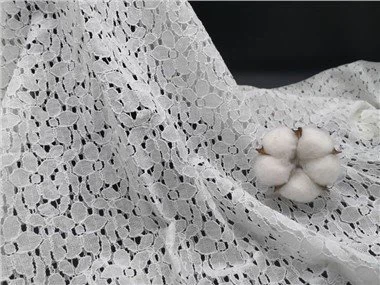
What is Knitted Lace Fabric?
Knitted lace fabric is a type of textile created using knitting techniques to produce open, airy patterns reminiscent of traditional hand-made lace. It is characterized by intricate designs that often include decorative elements such as eyelets, picots, and scallops. Unlike traditional lace, which is made by interlocking loops of yarn or thread using needles, knitted lace is produced on knitting machines that can replicate complex lace patterns at a much faster rate.
Benefits of Knitted Lace Fabric
Intricate design
Knitted lace features elaborate patterns that can be both visually stunning and unique. The ability to create intricate designs without the need for post-production embellishment makes it stand out.
Lightweight and breathable
The open structure of knitted lace allows air to circulate freely, which helps to keep the wearer cool and comfortable. This quality makes it ideal for warm weather clothing and lingerie.
Versatility
Knitted lace can be used in a multitude of ways. It can be layered over other fabrics for a sheer effect or worn alone for a more bold statement. It can also be incorporated into various garments, such as dresses, blouses, skirts, and even outerwear.
Texture and dimension
The three-dimensional quality of the patterns adds depth and interest to any design. The varied textures can enhance the overall look of a piece and provide visual interest.
Femininity and elegance
Knitted lace is often associated with femininity and grace. Its delicate appearance can add a touch of elegance to any outfit, making it a go-to choice for formal wear and special occasions.
Durability
Despite its delicate appearance, knitted lace can be quite durable, especially when made from high-quality yarns. With proper care, lace garments can last for many seasons.
Customization
Knitted lace can be customized in terms of pattern, color, and yarn type, allowing for a wide range of possibilities. This makes it possible for designers to create one-of-a-kind pieces that cater to individual tastes and preferences.
Comfort
Many knitted lace fabrics are made from soft, flexible yarns that conform to the body's shape, providing a comfortable fit. This is particularly important for garments that require close contact with the skin, such as lingerie and sleepwear.
Easy care
Contrary to popular belief, some knitted lace fabrics are machine washable, making them convenient to care for. However, it's always best to check the care label before washing to ensure proper handling.

Types of Knitted Lace Fabric
Bobbin lace: This type of lace is made using bobbins wound with thread, and it is traditionally crafted by hand. The patterns are created by weaving the threads together in a series of crossings and twists. Bobbin lace can be very intricate and is often used for edgings, collars, and cuffs.
Crochet lace: Made using a crochet hook and thread, crochet lace features openwork patterns that can be very detailed and delicate. It is known for its versatility and can be used to create a variety of lace trims, doilies, and garments.
Machine knit lace: Created on specialized knitting machines, machine lace replicates the look of hand-crafted lace but at a much faster pace. It can be made in larger quantities and features a wide range of patterns and styles, from simple eyelets to elaborate floral designs.
Filet lace
Filet lace is characterized by its square mesh background with open areas forming various patterns. It is created by alternating rows of solid stitches with rows of open spaces. Filet lace is often used for tablecloths, bedspreads, and garments.
Tatting
Tatting is a technique that uses a shuttle to create a series of loops and knots, resulting in a delicate lace-like fabric. Tatting is commonly used for making edgings, necklaces, earrings, and doilies.
Irish lace
Irish lace is a type of bobbin lace that originated in Ireland. It is known for its fine detailing and complex patterns, often featuring motifs inspired by nature, such as leaves and flowers. Irish lace was traditionally used for ecclesiastical garments and fine clothing.
Leavers lace
Named after the Leaver lace machines on which it is made, this type of machine knit lace is characterized by its large, intricate motifs. Leavers lace is known for its durability and has been used in a variety of applications, including clothing, linens, and home decor.
Application of Knitted Lace Fabric
Fashion Industry:
●Innerwear: Knitted lace is widely used in the manufacture of bras, panties, camisoles, and nightwear. Its breathability and comfort make it ideal for intimate apparel.
●Swimwear: Bikini tops, swimsuits, and cover-ups often incorporate knitted lace for a stylish and sexy look.
●Ready-to-wear: Lace details are seen on blouses, dresses, skirts, and even jackets. Designers use lace for accents like collars, cuffs, and hemlines or as an all-over print.
●Formal wear: Evening gowns and bridal attire frequently feature knitted lace for its elegant and luxurious appearance.
Home furnishings:
●Bed linens: Lace trims and accents can be found on duvet covers, pillowcases, and bed skirts, adding a romantic touch to bedroom decor.
●Tableware: Lace doilies, table runners, and napkins are used to enhance the dining experience with a touch of elegance.
●Curtains and window treatments: Delicate lace panels can soften a room's ambiance and provide a decorative element.
Accessories:
●Scarves: Knitted lace scarves offer a lightweight yet stylish accessory, perfect for adding a feminine touch to any outfit.
●Hats and gloves: Knitted lace can be used to make elegant hats and gloves, often associated with vintage or formal attire.
●Jewelry: Lace-inspired patterns are translated into necklaces, bracelets, and earrings, providing an airy and delicate look.
Art and craft:
●Embroidery: Lace can serve as a base for embroidery, where additional designs are added for a more intricate appearance.
●Decorative items: Lace is used to make decorative items such as wall hangings, picture frames, and ornaments, often as part of interior design.
Industrial applications:
●Filters: Certain types of knitted lace, due to their open structure, are used in industrial filtration systems for gases and liquids.
Healthcare:
●Wound dressings: The breathability of knitted lace makes it suitable for medical applications, such as wound dressings that allow air to reach the skin while protecting it.
Components of Knitted Lace Fabric
Knitted lace fabric is composed of interlocking loops or stitches formed on knitting machines or by hand. These components work together to create the characteristic open and intricate patterns that define lace. Here are the main structural components of knitted lace:
Stitches: Stitches are the fundamental units of knitted lace. They include basic stitches like the knit stitch and purl stitch, along with more complex ones like the yarn-over (YO) and the cable stitch. In lace, stitches are manipulated to form holes and patterns.
Yarn-overs (YOs): Yarn-overs are a way to create eyelets or open spaces in lace patterns. By bringing the yarn over the needle without knitting or purling, a loop is formed, which then becomes part of the lace pattern when the stitches are worked together.
Decreases: Decreases are techniques used to reduce the number of stitches, creating pointed edges or to shape the lace. Common decrease methods include the slip-slip-knit (SSK) and knit two together (k2tog).
Increases: Increases are used to add stitches to the knitted piece. They can help create a wider pattern or add shape. Methods include the make one (M1) increase and the knit into the front and back of the same stitch.
Lace pattern repeats: Lace patterns are typically designed in repeating sections, which are worked across a certain number of stitches and rows. Repetition ensures that the design remains consistent throughout the piece.
Edges: Edges define the border of the lace fabric. They can be straight, scalloped, or finished with picots (tiny loops) or other decorative elements to prevent curling and add aesthetic value.
Bobbins and shuttles: In hand-crafted lace, bobbins are used to hold and carry different colored threads, while a shuttle moves between the threads to create the lace pattern.
Tension: The tension at which the lace is knitted affects the size of the holes and the overall drape of the fabric. Consistent tension is crucial for maintaining the integrity of the lace pattern.
Material: The type of yarn or thread used can greatly influence the look and feel of the lace. Cotton, silk, wool, synthetic fibers, and blends can all be used to create lace, each with its own characteristics.
Knitted lace fabrics are typically made from fine yarns or threads that allow for the creation of intricate patterns and delicate details. The choice of material can greatly affect the look, texture, and durability of the lace. Here are some common materials used in the production of knitted lace:
Cotton: Cotton lace is soft, breathable, and has a lovely sheen. It's often used for summer wear, undergarments, and home furnishings. Cotton is also easy to care for and can be machine washed.
Silk
Silk lace is luxurious and has a natural Lustre. It's known for its strength and elasticity. Silk lace is commonly used in evening wear, bridal attire, and high-end fashion accessories. However, it requires careful handling and dry cleaning.
Wool
Wool lace is warm and cozy, making it ideal for cold-weather clothing such as sweaters and cardigans. It can be made from various types of wool, including merino or cashmere, which provide extra softness. Wool lace may pill over time but can usually be hand-washed.
Synthetic fibers
Materials like polyester, nylon, and rayon are often used because they are inexpensive and have good stretch properties. Synthetic lace can mimic the look of natural fibers and is commonly used in mass-produced garments. It's generally durable and easy to care for but may not have the same drape or breathability as natural fibers.
Linen
Linen lace is crisp and has a textured appearance. It's strong and absorbent, making it suitable for summer clothing and household items. Linen can wrinkle easily, so it often requires ironing to maintain its smooth finish.
Bamboo
Bamboo lace is eco-friendly and has a silky feel. It's known for being hypoallergenic and moisture-wicking, making it a comfortable choice for clothing. Bamboo lace can be machine washed and tends to have a slight sheen.
Metallics
Metallic threads can be incorporated into lace for a glamorous effect. These fibers might include strands of gold, silver, or other metallic colors and are often used in evening wear and decorative accents.
Process of Knitted Lace Fabric
Design: The first step is designing the lace pattern. This involves creating a schematic or chart that outlines the stitch patterns, repeats, and any special techniques used in the lace. Designers may use specialized software or Hand-painted their designs.
Selection of yarn: Based on the desired outcome, the designer or knitter selects an appropriate yarn. Factors such as fiber type, weight, color, and sheen are considered.
Preparation: Before knitting begins, the yarn is wound onto bobbins or balls to ensure even tension and minimize tangling. If using a knitting machine, the machine must be set up correctly with the appropriate needles and settings for the chosen lace pattern.
Swatching: Knitters often create a small sample swatch to test the gauge and ensure that the lace pattern looks as intended. Adjustments to the tension or pattern may be made based on the swatch results.
Casting on: The knitting process starts with casting on the required number of stitches. This can be done manually or using a knitting machine. The cast-on method should allow for easy manipulation of stitches and maintain the integrity of the lace pattern.
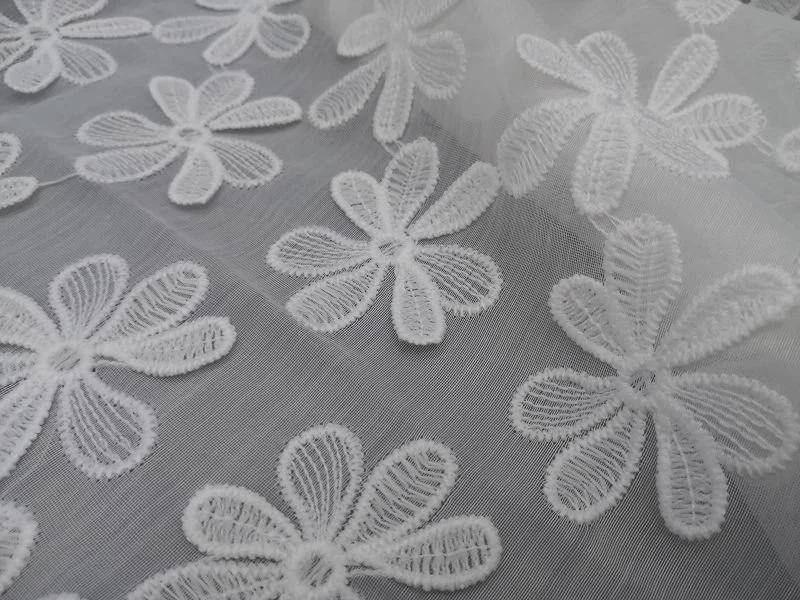
Knitting the pattern
Following the design chart, the knitter works through the pattern row by row, incorporating techniques such as yarn-overs, decreases, increases, and cable stitches to create the lace structure. Machine knitters program the patterns into the machine, which executes the stitches automatically.
Blocking
After the lace fabric is complete, it is typically blocked. Blocking involves pinning the piece to a flat surface and gently stretching it to the desired dimensions. Wet blocking, where the piece is dampened before being stretched, is common for lace to enhance the pattern definition and achieve a smooth finish.
Finishing
The final stage includes sewing any seams, adding trims or embellishments, and weaving in any loose ends. For machine-knit lace, additional finishing may involve cutting the fabric from the machine, removing selvage edges, and joining pieces if the lace is larger than the machine's working width.
Quality control
Throughout the process, quality control is essential to ensure that the lace meets the required standards. This includes checking for errors in the pattern, ensuring even tension, and verifying the overall appearance of the fabric.
How to Maintain Knitted Lace Fabric
Maintaining knitted lace fabric requires careful handling to preserve its delicate appearance and structure. Here are some guidelines to follow:
Hand washing
Most knitted lace fabrics are best hand-washed to prevent damage from machine agitation. Use cool or lukewarm water and a gentle detergent specifically designed for fine knits or lace. Gently squeeze rather than wring the lace to remove excess water.
01
Gentle soaking
Allow the lace to soak for a short period, typically no more than 20 minutes, to ensure the detergent has time to work on any dirt or stains.
02
Rinsing
Rinse the lace thoroughly in cool water until all soap suds are removed. You may need to rinse several times to ensure there is no residual detergent left, as this can cause discoloration or attract dirt.
03
Support while drying
To avoid stretching or distorting the shape of the lace, lay it flat on a clean towel. Roll the towel loosely with the lace inside to absorb excess water without applying pressure. Alternatively, you can pin the lace to a drying rack or a foam board, stretched to its original measurements, to air dry.
04
Blocking
If the lace has lost its shape during washing or needs shaping, block it again following the original design or the way you want it to look when dry. Use rust-proof pins and blocking boards to secure the lace in place.
05
Avoid heat
Do not use heat to dry or iron knitted lace. High temperatures can shrink the fabric, damage delicate details, and cause the lace to yellow over time.
06
Storage
Store knitted lace in a cool, dry place away from direct sunlight. Avoid storing it in plastic bags, as this can trap moisture and encourage mildew growth. Instead, use breathable fabric storage bags or acid-free tissue paper to protect the lace from dust and moths.
07
Hanging vs. folding
If possible, hang knitted lace garments on padded hangers to prevent shoulder stretching. For items that cannot be hung, fold them carefully and place them on a shelf or in a drawer lined with acid-free tissue paper.
08
Avoid tight spaces
Do not store knitted lace in tight spaces where it could become creased or distorted. Ensure that there is enough room for the item to retain its shape.
09
Professional cleaning
For very delicate or valuable lace pieces, consider professional dry cleaning to avoid potential damage from at-home cleaning methods.
10
Influence Factors of Knitted Lace Fabric Design
Several factors influence the design of knitted lace fabric, each contributing to the final appearance, texture, and functionality of the piece. These factors include:


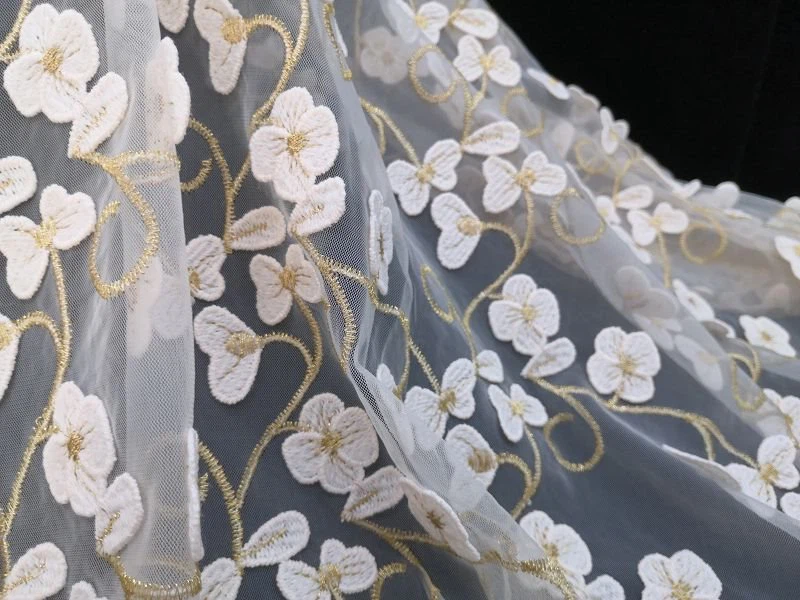
Stitch patterns: The basic building blocks of knitted lace are stitch patterns, which can range from simple eyelets to complex openwork motifs. The choice and arrangement of stitch patterns dictate the lace's intricacy and visual appeal.
Yarn type: Different fibers (e.g., cotton, silk, wool, synthetic blends) have distinct properties that affect the look, feel, and durability of the lace. The thickness and twist of the yarn will also influence the scale of the lace pattern and the overall drape of the fabric.
Color: The choice of yarn color can dramatically alter the perception of the lace design. Contrasting colors can highlight patterns, while monochromatic shades can create subtle effects.
Tension and gauge: The tightness of the knitting affects the size and spacing of the lace holes, as well as the overall density of the fabric. A consistent tension is crucial to maintaining the design integrity across the entire piece.
Shape and size: The dimensions and silhouette of the garment or item being knitted influence the design choices. For example, a wide, rectangular shawl might feature larger lace patterns than a narrow scarf.
Techniques: Incorporating different knitting techniques, such as bobbles, cables, or intarsia, can add depth and interest to the lace design. These elements can be used to frame the lace pattern or create contrast within the piece.
Finishing techniques: The method of joining seams, adding borders, and other finishing touches can complement or detract from the lace design. Well-executed finishes can elevate the overall quality and appearance of the lace fabric.
Functionality: The intended use of the lace fabric may guide design choices. For instance, a lace shawl will likely prioritize lightweight and airy qualities, while a lace sweater might require a denser fabric for warmth.
Trends and inspiration: Current fashion trends and sources of inspiration (e.g., art, nature, historical designs) can inform the aesthetic direction of knitted lace fabric. Designers often draw upon these influences to create contemporary pieces that resonate with modern sensibilities.
Personal style: The designer's own taste and style play a significant role in shaping the design of knitted lace fabric. Personal preferences can lead to unique combinations of stitch patterns, colors, and techniques that set a piece apart.
Knitted lace, a textile art form known for its delicate patterns and open structures, has a rich history that dates back several centuries. The origins of knitted lace can be traced to the Middle East, where it is believed that early forms of lace were created using knotted cords. Over time, the craft spread to Europe, where it evolved significantly.
During the 15th and 16th centuries, lace production became particularly prominent in Italy and Flanders (modern-day Belgium and the Netherlands). Initially, lace was made by hand using bobbins, a technique known as bobbin lace. However, the development of knitting machines in the 19th century revolutionized lace production, allowing for faster and more consistent manufacturing of lace fabrics.
The Industrial Revolution brought about further changes in the production of knitted lace. In England, John Heathcoat patented the bobbin net machine in 1806, which produced a type of lace similar to bobbin lace but made on mechanized frames. This innovation was followed by the development of the Leavers lace machine in France in the 1840s, which could replicate complex lace patterns previously made only by hand.
Knitted lace fabrics gained popularity due to their elegance and versatility. They were favored for clothing, especially for intricate garments such as collars, cuffs, veils, and dresses. The demand for lace continued to grow, making it a luxury item accessible only to the wealthy until the late 19th and early 20th centuries, when advancements in technology and the rise of mass production made lace more affordable and available to the general public.
Throughout the 20th century, knitted lace remained a popular choice for fashion and home decor, adapting to changing styles and tastes. Today, knitted lace fabrics are produced using a variety of methods, including traditional hand-knitting techniques and advanced machinery. Modern knitters and designers often combine traditional patterns with contemporary designs to create unique and innovative pieces.
The history of knitted lace is marked by a blend of craftsmanship, technological innovation, and cultural significance, reflecting the evolution of textiles and the enduring human fascination with creating beautiful and elaborate designs.
What Is the Difference Between Knitted Lace and Lace Knitting?
Knitted lace and lace knitting are two related but distinct techniques in knitting. Here are some of the differences between them:
Technique: Knitted lace typically involves using specific stitches and stitch combinations to create openwork or lacy patterns. It often relies on increases and decreases, yarn overs, and other knitting maneuvers to create the lace effect. Lace knitting, on the other hand, specifically refers to knitting with lace yarn or thread to create delicate and intricate lace patterns.
Yarn weight: Knitted lace can be worked with a variety of yarn weights, from fine to medium. Lace knitting, however, is commonly associated with using thinner yarns or threads, often lace-weight or sock-weight yarn, to achieve a more delicate and ethereal look.
Complexity and detail: Knitted lace projects can range from simple lace patterns to highly complex and intricate designs. Lace knitting tends to involve more intricate stitch work and smaller stitch patterns, requiring a greater level of skill and attention to detail.
Usage and applications: Knitted lace can be incorporated into various projects, such as scarfs, shawls, sweaters, or even home décor items. Lace knitting is often used for creating delicate lace garments, accessories, or heirloom pieces with a focus on the intricate lace patterns.
Time and effort: Lace knitting projects generally take more time and require greater focus as the stitches are smaller and more precise. Knitted lace projects may vary in terms of difficulty and time commitment depending on the pattern and complexity.
Visual effect: Knitted lace has a more open and airy appearance, with larger lace holes and patterns. Lace knitting, with its thinner yarn, creates a more delicate and filigree-like look.
It's important to note that these are general differences, and there can be variations within each technique. Some knitting patterns may combine elements of knitted lace and lace knitting, or there may be different names and interpretations depending on the knitting community or specific projects. Both knitted lace and lace knitting offer opportunities to create beautiful and unique lace knitting projects, allowing knitters to showcase their creativity and skill.

The total investment of the company is 300 million Yuan, have more than 600 staff in total , and plant area is 90000 square meters.
FAQ
Q: What is knitted lace, and how does it differ from crocheted lace?
Q: What are the common stitches used in knitted lace?
Q: What types of yarn are typically used for knitted lace?
Q: How does gauge impact knitted lace design?
Q: What are some traditional patterns found in knitted lace?
Q: How has technology influenced the production of knitted lace?
Q: What are some common applications of knitted lace fabric?
Q: How can one care for knitted lace fabrics?
Q: What is the difference between machine-made and hand-knit lace?
Q: How has knitted lace evolved over time?
Q: What is the difference between knitted lace and lace knitting?
Q: What does lace fabric feel like?
Q: Is knitted lace stretchy?
Q: Is lace knitted or woven?
Q: What are the characteristics of knitted lace?
Q: What is the difference between knitted lace and crochet lace?
Q: How can you identify a knitted fabric?
Q: How can you tell good lace?
Q: What is the name of a warp knit that looks like lace?
Q: What yarn is best for lace knitting?
Wool, alpaca, and other animal fiber blends (like cashmere!) are lace knitting classics. We choose yarns like Isager Spinni Wool 1, Alpaca 2, and Rowan Alpaca Soft DK for so many of our lace projects because they provide such great structure and memory to your stitches.
As one of the most professional knitted lace fabric manufacturers and suppliers in China, we're featured by custom products made in China. Please rest assured to buy high quality knitted lace fabric for sale here from our factory. Contact us for customized service.
Cotton Lace Fabric, elastic lace fabric, white cotton lace fabric