

. Supplier
Founded in 1991, Jiangsu Golden Autumn Group is one of the world's leading manufacturers of garment accessories serving customers all over the world. The products are widely used in intimate apparel and sportswear. The company has advanced manufacturing facilities and technologies. Complete processes including yarn twisting, covering, yarn dyeing, crochet, weaving, warp knitting, after-dyeing and printing are all under one roof.
The company was founded in 1991 and started from ordinary elastics; year 2000, started to develop all kinds of jacquard elastic and were among the earliest factories producing jacquard elastics in Jiangsu province; year 2004, transisted and upgraded to producing jacquard, woven elastic, and after-dyeing elastics for underwear(bra strap, underwear band, folded elastc); year 2007, moved to new factory, with enlarged capacity and improved quality control, to serve customers all over the world; year 2011,established new company Jiangsu Golden Autumn Lace Co., LTD, professional in design, development, production and sales of lace and fabric products.
Why Choose Us?
High quality
Our products are manufactured or executed to very high standards, using the finest materials and manufacturing processes.
Competitive Price
We offering a higher-quality product or service at an equivalent price. As a result we have a growing and loyal customer base.
Rich experience
Our company has many years of production work experience. The concept of customer-oriented and win-win cooperation makes the company more mature and stronger.
Global shipping
Our products support global shipping and the logistics system is complete, so our customers are all over the world.
After-sale service
Professional and thoughtful after -sales team, let you worry about us after -sales Intimate service, strong after -sales team support.
Advanced equipment
A machine, tool or instrument designed with advanced technology and functionality to perform highly specific tasks with greater precision, efficiency and reliability.
-

Available in various designs and colors, high quality and competitive price, superb in workmanship
Add to Inquiry -
Jiangsu Golden Autumn Lace Company is located in NO.301,Chenggang Road,Chongchuan
Add to Inquiry -
Product Type:Lace. 7 days sample order lead time:Support. Material:Spandex / Nylon. Fabric
Add to Inquiry -
Cute Childrens Wear Elastic Lace Trim
Cargo Number: JX18-7320. Material :85% chinlon 15% spandex. Bar width :1.5 cm. Brand: Golden Autumn
Add to Inquiry -
Product Type:Lace. 7 days sample order lead time:Not Support. Material:Spandex and Nylon.
Add to Inquiry -
Roduct Type:Lace . 7 days sample order lead time:Support. Material:Spandex / Nylon. Fabric
Add to Inquiry -
Decorative Inelastic Lace Trim
Thick and transparent texture, soft feel, bright color, good color fastness, will not pill
Add to Inquiry -
The goods before we ship out will be checked whether it is good or not, if is damaged, we won’t
Add to Inquiry -
●High competitiveness of nice cost performance. Fully equipped tangible plant,professional quality
Add to Inquiry


What is Knitted Lace Trim?
Knitted lace trim, also known as lace edging or lace insertion, is a decorative element made from fine yarns and executed through knitting techniques that create openwork patterns reminiscent of traditional lace. This trim can be added to garments, home furnishings, and other textile items to provide an elegant and delicate touch.
The production of knitted lace involves specialized stitches such as yarn-overs, slip-stitches, and decreases, which are combined in intricate patterns to form lace-like motifs. These patterns can range from simple geometric designs to complex floral or abstract patterns.
Benefits of Knitted Lace Trim
Elegance and delicacy
Lace adds a sophisticated and feminine touch to clothing and home textiles. Its intricate patterns and openwork design can elevate a simple item into a statement piece.
01
Versatility
Knitted lace trim is incredibly versatile and can be applied to a wide variety of fabrics and items, such as garments, linens, and accessories. It can be used to embellish borders, necklines, sleeves, hemlines, and edges.
02
Texture and dimension
The texture and dimensionality of lace trims can provide visual interest and depth to a design. They can contrast with solid fabrics or complement other patterns, creating a harmonious overall look.
03
Customization
Knitted lace trim comes in various styles, widths, and colors, allowing for customization to suit specific design requirements or personal preferences. It can be tailored to match the main fabric or serve as a striking accent.
04
Lightweight and breathable
Lace is lightweight and allows air to pass through, which makes it ideal for warm weather wear or for use in bedding and summer linens. It provides comfort without adding bulk.
05
Durability
When properly cared for, knitted lace trims can be quite durable. Modern knitting techniques and materials have improved the longevity of lace, making it suitable for everyday use.
06
Skill and artistry
Knitted lace trims often represent a high level of craftsmanship. Hand-knitted lace, in particular, is a work of art, showcasing the skill of the knitter and adding value to the finished product.
07
Adds value
The addition of lace trim can increase the perceived value of an item, making it more attractive in the marketplace. It can transform a basic piece into a luxury item.
08
Cultural significance
Lace has historical and cultural significance in many societies, representing tradition and heritage. Using lace trim can evoke a sense of nostalgia and connect modern designs with classic aesthetics.
09
Easy maintenance
Many knitted lace trims are designed to be easy to care for, machine washable, and able to withstand regular laundering, making them practical for everyday use.
10
Types of Knitted Lace Trim

1. Edging lace: This type of lace trim is used to finish off the edges of garments, such as necklines, cuffs, and hemlines. It typically has a scalloped or wavy edge and is designed to add a delicate border.
2. Insertion lace: Insertion lace is knitted separately and then sewn onto a garment as a panel or applique. It can be used to create decorative accents on the body of a garment, such as along the front of a dress or blouse.
3. Bobbin lace: Although not strictly knitted, bobbin lace is a traditional lace-making technique that creates intricate patterns. It's often incorporated into knitted projects as a trim or as part of a design.
4. Tatting: Tatting is another lace-making technique that involves creating a series of loops and knots to form a lace-like pattern. Tatted lace can be used as trim and is characterized by its fine, open structure.
5. Crocheted lace: While technically different from knitting, crocheted lace is often grouped with knitted lace because of its similar use as trim. It can be worked in fine threads to create delicate, intricate patterns.
6. Filet lace: Filet lace features a grid-like pattern that can be filled in with various motifs. It's known for its clean lines and geometric designs, making it versatile for modern and traditional looks.
7. Cluny lace: Cluny lace is a type of bobbin lace characterized by its floral motifs and scalloped edges. It's named after the French town of Cluny and is often used as a luxurious trim on formal wear.
8. Flemish or bruges lace: Flemish lace is a type of bobbin lace that originated in Belgium. It's known for its elaborate patterns and is considered one of the most intricate forms of lace.
9. Point d'angoleme lace: This is a type of needle lace that originated in France. It features a distinctive raised pattern that gives it a three-dimensional effect, making it perfect for adding texture and dimension to trims.
10. Liechtenstein lace: Liechtenstein lace is a type of filet lace that incorporates needlepoint stitches to create a delicate and intricate design. It's named after the country where it was first developed.

Application of Knitted Lace Trim
Fashion industry:
●Garments: Knitted lace trims are widely used in women's clothing, particularly in evening wear, bridal gowns, and lingerie. They can embellish necklines, sleeves, hemlines, and the edges of skirts and dresses.
●Undergarments: Lace trims add a feminine touch to bras, panties, slips, and camisoles.
●Accessories: Scarves, hats, gloves, and shawls often feature lace borders for a luxurious feel.
●Children's wear: Babies' and children's clothing, such as dresses, rompers, and christening gowns, frequently incorporate lace trims for a delicate appearance.
Home furnishings:
●Bed linens: Pillowcases, duvet covers, and bedspreads may have lace edging to enhance their elegance.
●Tableware:Tablecloths, napkins, and runners sometimes include lace trim as a decorative element.
●Curtains: Lace trim can soften the look of window treatments and add a romantic touch to interior spaces.
Interior decor:
●Lace panels: Lace panels can be hung as artwork or used as decorative dividers in rooms.
●Lampshades: Lace can be applied to the edges of lampshades for a dainty and soft lighting effect.
●Furniture: Chair backs, ottomans, and headboards can feature lace trim for an antique or vintage look.
Accessory production:
●Jewelry: Lace-inspired patterns can be incorporated into necklaces, earrings, and bracelets, particularly those designed with a bohemian or romantic theme.
●Handbags: Delicate lace trims can adorn the edges or handles of handbags, giving them a unique and stylish appearance.
Wedding and event decor:
●Veils: Bridal veils are traditionally made from lace, and lace trim can be added to enhance the veil's design.
●Decorative items: Centerpieces, chair decorations, and backdrops for events often include lace elements for a romantic and elegant atmosphere.
●When applying knitted lace trim, it is important to consider the following factors to ensure a professional and cohesive finish:
●Compatibility: The trim should complement the material it is being applied to in terms of color, weight, and texture.
●Technique: The method of attachment (such as sewing by hand or machine) should be chosen based on the delicacy of the lace and the fabric to avoid damage.
●Maintenance: The care instructions for both the main item and the lace trim should be considered to ensure longevity and ease of maintenance.
Components of Knitted Lace Trim
Knitted lace trim consists of several components that work together to create its distinctive appearance and structure. Understanding these components is essential for anyone looking to incorporate lace trim into their designs or for those interested in the craft of knitting lace.
Stitches
Knitted lace trims are made up of various stitch patterns, which can include yarn overs, decreases, and combinations thereof. These stitches create the openwork that defines lace. Common stitch patterns include eyelet patterns, mesh patterns, and more intricate flower or leaf motifs.
Yarn
The type of yarn used in knitted lace can greatly affect the look and feel of the trim. Fine, smooth yarns such as silk, cotton, or linen are commonly used to create delicate lace, while wool or synthetic fibers might be used for a more robust or rustic effect.
Needle size
Smaller needles are typically used for knitting lace, as they produce tighter stitches and finer details. The gauge of the needles should match the recommended gauge of the yarn to achieve the desired lace pattern.
Pattern repeats
Lace trims often feature repeating motifs or patterns that create symmetry and rhythm. Designers must carefully plan these repeats to ensure continuity when the trim is applied to a larger piece.
Border stitches
Many lace trims have a border or selvedge that helps to stabilize the edge. These stitches can be simple or elaborate and may include picots (tiny loops), scallops, or other decorative elements.
Joining methods
When multiple sections of lace trim are needed, they must be joined together seamlessly. This can involve techniques such as slip stitching, grafting, or picking up stitches and working them into the existing trim.
Finishing techniques
To prevent unraveling, the ends of the lace trim are usually finished with a bind-off or sewn down. Blocking is also an important finishing step for lace trims, as it allows the trim to open up and reach its full design potential.
Fasteners
Depending on how the trim will be applied, fasteners such as hooks and eyes, buttons, or snaps may be included to secure the trim to the garment or item.
Material of Knitted Lace Trim
Cotton
Cotton is a popular choice for lace trims because it is breathable, comfortable, and has a natural sheen that adds to the trim's elegance. It's also suitable for items that require frequent washing.
Silk
Silk lace trims offer a luxurious feel and a lustrous finish. They are often used in high-end fashion and bridal wear for their sophistication and opulence. Silk is less durable than cotton and requires more careful handling.
Polyester
Polyester is known for its versatility and resistance to wrinkles. It's often used in lace trims that are meant to be more affordable and easy to care for. Polyester lace trims can mimic the appearance of natural fibers but may not have the same softness or drape.
Nylon
Nylon is another synthetic fiber used in lace trims. It's lightweight and has good elasticity, which makes it suitable for trims that need to stretch. Nylon is also resistant to abrasion and mildew.
Linen
Linen lace trims have a crisp texture and a rustic charm. They are ideal for summer wear and casual designs. Like cotton, linen is a natural fiber that is breathable, but it tends to wrinkle more easily.
Acrylic
Acrylic is a synthetic fiber that resembles wool. It's used in lace trims that need to be warm and cozy. Acrylic is less expensive than natural fibers and is easy to care for, but it can pill over time.
Wool
Wool lace trims provide warmth and a soft, fuzzy appearance. They are used in cold-weather accessories and garments. Wool requires special care to avoid shrinking and must be blocked properly after washing.
Blends
Often, lace trims are made from blends of different fibers to combine the desirable qualities of each. For example, a blend of silk and polyester might be used to create a trim that has the look of silk but with improved durability and easier care.
Designing the pattern: The first step is to design the lace pattern. This involves creating charts or written instructions that detail the stitch pattern and any repeating motifs. Designers must consider the scale and placement of the lace on the intended garment or item.
Selecting materials: Based on the design, the right type of yarn and needle size must be chosen. The yarn should complement the project's purpose, whether it's for a formal dress, a casual scarf, or a home accessory.
Swatching
Before starting the trim, swatching is essential to ensure that the chosen yarn and needle size produce the correct gauge. This allows the knitter to adjust the pattern if necessary to achieve the desired outcome.
Casting on
A suitable cast-on method is selected that accommodates the first row of the lace pattern. Some methods, like the long-tail cast-on, are preferred for their invisibility in the finished trim.
Knitting the trim
The actual knitting process involves following the chart or written instructions for the lace pattern. This includes executing yarn overs, decreases, and other stitch manipulations that create the lace's openwork.
Shaping
If the trim requires shaping—such as curved edges or points—the knitter must carefully follow the pattern instructions to shape the trim appropriately.
Binding off
Once the trim is complete, it must be bound off securely. The binding off technique should be chosen based on the last stitch of the lace pattern to maintain the integrity of the design.
Blocking
After knitting, the trim is usually blocked to enhance its shape and size. Blocking involves pinning the trim to a flat surface and using steam or a damp sponge to gently shape and open up the lace.
Finishing
The trim may need to be hemmed or have its ends secured. This could involve sewing the trim onto the garment or item or weaving in any loose ends.
Incorporating into the final product
The knitted lace trim is then attached to the main garment or item. This could be done by sewing, pinning, or incorporating the trim during the construction of the item.
Quality check
A final inspection is performed to ensure that the trim is securely attached and that there are no defects in the knitting or finishing.

How to Maintain Knitted Lace Trim
Hand washing: Most lace trims should be hand washed to prevent damage. Use a gentle detergent designed for fine fabrics and soak the item in cool water for a short period. Gently squeeze out excess water rather than wringing, as this can stretch the lace.
Rinsing: Rinse the lace trim thoroughly in cool water until all soap suds are removed. Avoid hot water, as it can cause the fibers to shrink or become distorted.
Drying: Lay the lace trim flat on a clean towel and roll it up to absorb moisture without stretching. Do not hang dry or tumble dry, as these methods can cause the trim to lose its shape or become misshapen.
Blocking: If necessary, block the lace trim to its original shape while it's still damp by pinning it onto a cushion or a piece of foam. Allow it to dry completely before removing the pins.
Storage
Store lace trims folded neatly to prevent creasing. Avoid hanging them, as gravity can pull on the delicate fibers and alter the shape. Use acid-free tissue paper or fabric to protect the lace from dust and moths.
Avoid mechanical action
Machine washing, ironing, and dry cleaning can damage the structure of knitted lace trims. Always opt for hand care when possible.
Handle with care
When wearing or handling lace trims, be mindful of snagging them on rough surfaces or catching them on jewelry or zippers.
Repair promptly
Should the lace trim snag or unravel, repair it promptly to prevent further damage. Use a tapestry needle and matching yarn to carefully weave in loose ends or fix broken sections.
How to Choose and Use Knitted Lace Trim Correctly
Choosing and using knitted lace trim correctly involves considering the context in which it will be used, matching it with the appropriate material, ensuring compatibility with the main garment or item, and applying proper techniques for attachment and maintenance. Here are some detailed steps to guide you through the process
Assessing the purpose: Determine what the lace trim will be used for—decorative edging, embellishment, or as a standalone element. This will help in selecting the right style, width, and complexity of the lace pattern.
Selecting the right material: The material of the lace trim should complement the main garment. For example, a cotton lace trim would pair well with a casual cotton dress, whereas a silk lace might be more suitable for a formal occasion. Consider the washability and care requirements of both the lace trim and the main item.
Matching scale and style: Ensure that the scale of the lace pattern is in harmony with the rest of the garment. A large, bold lace pattern might overwhelm a small garment, whereas a delicate lace might be lost on a large piece. The style of the lace should also match the overall aesthetic of the item.
Measurements and planning: Measure the area where you intend to apply the lace trim. Plan for extra length to account for seams, hemlines, or any areas where the trim might need to be eased in.
Attaching the trim: There are several methods for attaching lace trim, including sewing it by hand or machine, using a lace binder, or applying a fusible web for adhesion. Hand sewing with a fine needle and thread can give a more polished finish, especially for delicate items.
Secure seams: When sewing the trim, take care to backstitch at the beginning and end of each seam to prevent unraveling. Ensure that the stitches are small and inconspicuous.
Pressing: If needed, use a press cloth and a low iron setting to gently press the lace trim. Be cautious not to flatten the lace pattern or apply too much heat, which could damage the fibers.
Maintenance and care: Follow the care instructions provided for the lace trim. Generally, hand washing in cool water and laying flat to dry is recommended. Avoid mechanical action like vigorous scrubbing, wringing, or machine drying.
Storage: Store lace trims flat or wrapped around a cardboard tube to maintain their shape. Avoid hanging them, as this can cause stretching.
Influence Factors of Knitted Lace Trim Design

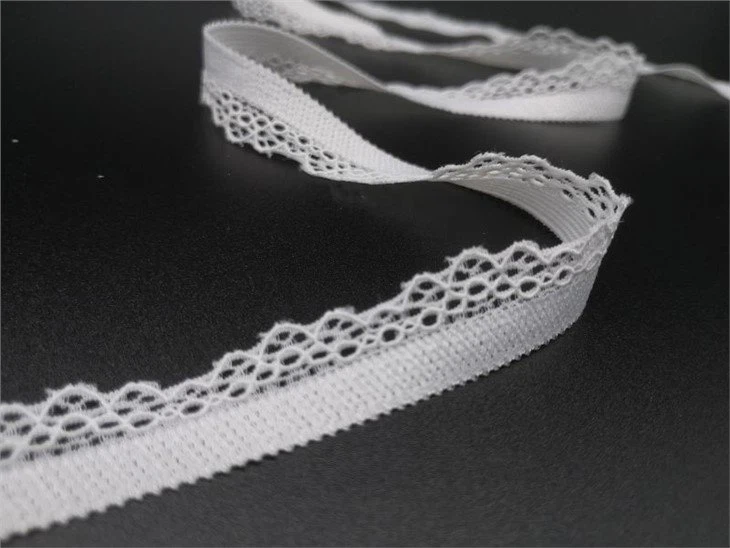


Material: The type of yarn used affects the texture, weight, and drape of the lace trim. Natural fibers like cotton, silk, and wool provide different looks and feels compared to synthetic fibers like acrylic or polyester. The choice of material also influences the care and durability of the trim.
Stitch pattern: The complexity of the stitch pattern defines the intricacy of the lace trim. Common stitches include eyelets, picots, scallops, and cable patterns. The chosen pattern should align with the intended use and desired aesthetic.
Gauge: The tightness or looseness of the knit affects the size and spacing of the lace motifs. A tighter gauge results in finer details, while a looser gauge creates larger motifs. The gauge must be consistent to ensure the trim lies flat and symmetrical.
Width: The trim's width determines how prominent it will be on the finished item. Wider trims can be statement pieces, while narrower ones serve as delicate accents. The chosen width should be proportional to the size of the garment or item.
Color: The color of the lace trim should complement or contrast with the main item as desired. It can be dyed to match specific shades, or multiple colors can be used to create a gradient or striped effect.
Edge treatment: The way the trim is finished at the edges can affect its appearance and function. Options include rolled hems, picot borders, or leaving raw edges for a more rustic look. The edge treatment should enhance the overall design and prevent unraveling.
Functionality: The intended use of the lace trim—whether for decoration, reinforcement, or a design feature—influences its design. For example, a lace trim along the neckline of a sweater requires different considerations compared to a trim used as an embellishment on a cuff.
Tension variation: Subtle changes in tension can create interesting textures and effects within the lace pattern. Deliberate tension variations can add depth and visual interest to the design.
Design trends: Current fashion trends can influence the design of lace trims, making certain patterns, colors, and styles more popular. Designers often incorporate contemporary elements to appeal to a broader audience.
Technique: The method of knitting the lace trim—such as traditional flat knitting, crochet, or machine knitting—can affect the final outcome. Each technique offers unique possibilities and limitations that influence the design process.
Understanding and balancing these factors allows designers to create knitted lace trims that are visually appealing, functional, and suited to their intended application.

The total investment of the company is 300 million Yuan, have more than 600 staff in total , and plant area is 90000 square meters.
FAQ
Q: What is knitted lace trim?
Q: How is knitted lace trim different from crocheted lace trim?
Q: What materials are commonly used for knitted lace trim?
Q: What types of stitch patterns are used in knitted lace trim?
Q: How do I choose the right width for my knitted lace trim?
Q: Can I customize the color of my knitted lace trim?
Q: How do I attach knitted lace trim to an item?
Q: How do I care for knitted lace trim?
Q: How do I store knitted lace trim?
Q: Are there any special techniques for knitting lace patterns?
Q: How do I troubleshoot common problems in knitted lace trim?
Q: Where can I find inspiration for knitted lace trim designs?
Q: Can I create custom designs for knitted lace trim?
Q: What tools and equipment do I need to knit lace trim?
Q: How do I measure and plan for my knitted lace trim?
Q: What are the best practices for maintaining tension consistency in knitted lace trim?
Q: How do I incorporate beads or other embellishments into my knitted lace trim?
Q: Are there any tips for preventing curling edges in knitted lace trim?
Q: How do I troubleshoot dropped stitches in knitted lace trim?
Q: What are some common applications for knitted lace trim?
As one of the most professional knitted lace trim manufacturers and suppliers in China, we're featured by custom products made in China. Please rest assured to buy high quality knitted lace trim for sale here from our factory. Contact us for customized service.
straight lace trim, stretch lace trim by the yard, 3 inch flat lace trim