


. Supplier
Founded in 1991, Jiangsu Golden Autumn Group is one of the world's leading manufacturers of garment accessories serving customers all over the world. The products are widely used in intimate apparel and sportswear. The company has advanced manufacturing facilities and technologies. Complete processes including yarn twisting, covering, yarn dyeing, crochet, weaving, warp knitting, after-dyeing and printing are all under one roof.
The company was founded in 1991 and started from ordinary elastics; year 2000, started to develop all kinds of jacquard elastic and were among the earliest factories producing jacquard elastics in Jiangsu province; year 2004, transisted and upgraded to producing jacquard, woven elastic, and after-dyeing elastics for underwear(bra strap, underwear band, folded elastc); year 2007, moved to new factory, with enlarged capacity and improved quality control, to serve customers all over the world; year 2011,established new company Jiangsu Golden Autumn Lace Co., LTD, professional in design, development, production and sales of lace and fabric products.
Why Choose Us?
High quality
Our products are manufactured or executed to very high standards, using the finest materials and manufacturing processes.
Competitive Price
We offering a higher-quality product or service at an equivalent price. As a result we have a growing and loyal customer base.
Rich experience
Our company has many years of production work experience. The concept of customer-oriented and win-win cooperation makes the company more mature and stronger.
Global shipping
Our products support global shipping and the logistics system is complete, so our customers are all over the world.
After-sale service
Professional and thoughtful after -sales team, let you worry about us after -sales Intimate service, strong after -sales team support.
Advanced equipment
A machine, tool or instrument designed with advanced technology and functionality to perform highly specific tasks with greater precision, efficiency and reliability.
-

Dear,you can easily get almost all kinds of laces from us, the best way to get the information you
Add to Inquiry -
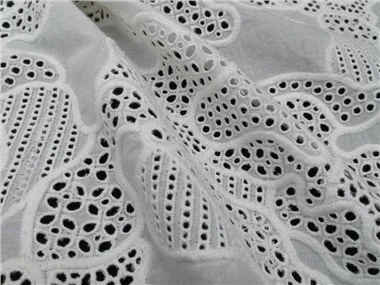
100% Cotton Embroidery Lace Fabric
Product Type:Lace. 7 days sample order lead time:Support. Material:100% cotton. Fabric Type:Cotton
Add to Inquiry -
Selling Units:Single item. Single package size: 20X10X3 cm. Single gross weight:0.150 kg
Add to Inquiry -
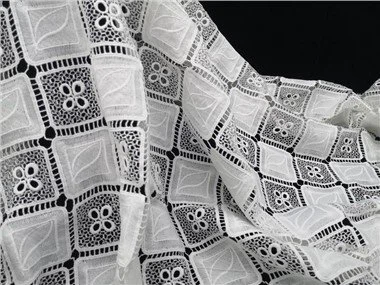
Geometric Embroidery Lace Fabric
Product Type:Lace. 7 days sample order lead time:Support. Material:100% Polyester. Fabric
Add to Inquiry -
Before the orders and payments, please send the details to us to confirm. Quantity, unit price,
Add to Inquiry



What is Embroidery Lace Fabric?
Embroidery lace fabric is a textile that combines elements of both embroidery and lace-making techniques. It is characterized by its intricate patterns and designs that are created through the application of embroidery stitches onto a base material, which can be either fabric or paper. The embroidery is often done using fine threads such as cotton, silk, or rayon, and the stitches may include satin stitch, French knots, and eyelets, among others.
The process of creating embroidery lace begins with the design being drawn or transferred onto the base material. Then, using specialized embroidery needles and threads, an artisan embroiders the design, adding texture, detail, and dimension to the piece. Once the embroidery is complete, the background material is cut away, leaving only the embroidered pattern. This results in a delicate and lace-like effect, hence the term "embroidery lace."
Aesthetic appeal: Embroidery lace is known for its intricate and delicate patterns that add a touch of elegance and sophistication to any garment or item. The lace patterns can range from simple and subtle to elaborate and ornate, making it a versatile choice for a wide range of styles and designs.
Durability: Despite its delicate appearance, embroidery lace is actually quite durable. The embroidery stitches are securely applied to the base material, which means that the lace is less likely to fray or unravel over time. Additionally, high-quality embroidery lace is often treated with special finishes that help protect it against wear and tear.
Versatility
Embroidery lace can be used in a wide range of applications, including clothing, home decor, and accessories. It can be incorporated into a variety of different styles and designs, from traditional and elegant to modern and contemporary. This makes it a versatile choice for designers who want to create unique and eye-catching products.
Breathability
Embroidery lace is often made from lightweight and Get some air materials, such as cotton or silk. This means that it is comfortable to wear in warmer weather and can help keep the body cool and dry. Additionally, the open spaces in the lace pattern allow air to circulate, further enhancing its breathability.
Eco-friendly
Many embroidery lace fabrics are made from natural fibers such as cotton or silk, which are renewable resources. Additionally, some manufacturers use sustainable practices in their production processes, such as recycling waste materials and minimizing the use of chemicals. Choosing embroidery lace fabrics made from these materials and practices can be a more environmentally friendly option.
Types of Embroidery Lace Fabric
Alençon lace
Originating in France, Alençon lace is one of the most luxurious and complex forms of needlepoint lace. It features floral motifs with a distinctive raised pattern and is typically made from cotton or linen thread on a cotton net ground.
Chantilly lace
Named after the town of Chantilly in France, this type of lace is known for its large, open designs with intricate patterns. It is traditionally made from cotton or silk and is characterized by its fine detailing and scalloped edges.
Bobbin lace
Also known as pillow lace, bobbin lace is made by twisting and plaiting pairs of threads wound on bobbins. It can be created in various patterns and densities and is often used for edging and trimmings. Examples include Binche lace from Belgium and Torchon lace, which is simpler in design.
Cotton lace
Made primarily from cotton thread, cotton lace is a versatile and affordable type of embroidery lace. It comes in many forms, including crochet lace, filet lace (which has geometric patterns), and Irish lace (such as Clones lace and Carrickmacross lace).
Venetian lace
Hailing from Italy, Venetian lace is distinguished by its elaborate patterns and raised work. It is made using a combination of needle and bobbin techniques and is often used for ecclesiastical vestments, wedding dresses, and other formal attire.
Valenciennes lace
This Belgian lace is known for its diamond-shaped mesh background and detailed floral patterns. It is usually made with cotton thread on a cotton net foundation and is widely used for lingerie, wedding gowns, and other garments.
Schwalm lace
Schwalm lace originates from the Schwalm region in Germany and is characterized by its geometric patterns and openwork. It is traditionally made with white cotton thread on a linen or cotton background and is known for its durability.
Needlepoint lace
This type of lace is entirely made by hand with a needle and thread. Needlepoint lace does not have a net backing; instead, the design is formed by stitching directly onto a fabric or paper. Examples include Reticella lace, which has a grid-like pattern, and guipure lace, which is dense and has no net backing.
Application of Embroidery Lace Fabric
1.Fashion industry:
●Bridal wear: Embroidery lace is extensively used in wedding dresses, veils, and accessories due to its elegant and romantic aesthetic. Designers incorporate different types of lace to create intricate patterns and textures that enhance the overall look.
●Evening gowns and cocktail dresses: For formal events, embroidery lace adds a touch of glamour and sophistication to evening wear, often used as overlays or accents on sleeves, necklines, and hemlines.
●Lingerie and nightwear: Lace fabrics, especially those with delicate embroidery, are popular in intimate apparel due to their comfort and visual appeal.
●Ready-to-wear clothing: From blouses and skirts to shirts and jackets, embroidery lace is used to add detailing and interest to everyday wear.
2.Home decor:
●Table linens: Lace is commonly used for tablecloths, napkins, and runners, bringing a classic and elegant touch to dining settings.
●Bedding and curtains: Lace trims and edgings are often added to bedspreads, duvet covers, and curtains for a soft and decorative element.
●Decorative pillows: Throw pillows with lace accents can enhance the ambiance of living rooms and bedrooms.
3.Accessories:
●Hats and headpieces: Lace is used to create elegant hats and headpieces for special occasions.
●Scarves and shawls: Lace scarves and shawls add a layer of luxury and femininity to outerwear.
●Jewelry: Lace motifs are sometimes incorporated into jewelry design, particularly in necklaces, earrings, and bracelets.
4.Art and craft:
●Embroidery projects: Lace can be used as a base or overlay for embroidery projects, providing a pre-made design or a delicate background for hand or machine stitching.
●Sewing patterns: Lace is often used in sewing patterns to add decorative elements to clothing and home furnishings.
●Quilting: In quilting, lace can be appliquéd onto the surface of a quilt for decoration or used as part of the quilting design itself.
5.Performance arts:
●Costume design: In theater, opera, and ballet, embroidery lace is used to create costumes that evoke historical periods or convey a character's elegance.
●Dancewear: Ballet dancers often wear leotards and tutus adorned with lace, enhancing their movements with delicate patterns.
Components of Embroidery Lace Fabric
Ground material: This is the underlying fabric or net that provides the support for the embroidery stitches. Common materials include cotton, linen, or synthetic fibers. The type of ground material affects the flexibility, transparency, and texture of the lace.
Thread: The thread used for embroidery lace can vary widely in terms of material (cotton, silk, rayon, etc.), color, and thickness. The choice of thread influences the delicacy, sheen, and strength of the finished lace.
Pattern elements: These are the specific motifs or designs that are created through the embroidery process. They can range from simple geometric shapes to elaborate floral or animal designs. The complexity of the pattern elements determines the intricacy and visual impact of the lace.
Bobbins: In bobbin lace making, bobbins are spools that hold the thread. Each bobbin corresponds to a different thread color and is manipulated to create the lace pattern.
Needles: Specialized needles are used for creating embroidery lace. The type of needle depends on the technique being employed, with tapestry needles being common for needlepoint lace and lace-making pins used for bobbin lace.
Tambour frame: This is a hoop or frame that holds the ground material taut during the embroidery process. It ensures even tension and allows for precise stitching.
Pillow
In bobbin lace making, a pillow (or bolster) is used to support the work. The pillow has a padded surface, and the pattern is tacked onto it to provide a guide for the lace maker.
Pricking pattern
A pricking pattern is a paper template that outlines the design of the lace. It includes holes that correspond to the points where the threads cross or join. The pricking pattern serves as a guide during the creation of the lace.
Lace tape
In certain types of lace, such as guipure, lace tape is used as an edging or to create decorative borders around the lace design.
Finishing touches
After the embroidery is complete, finishing touches may include blocking the lace to shape it, adding scallops or picots, or applying a border.
Material of Embroidery Lace Fabric
Natural fibers
Cotton
Cotton is a popular choice for its breathability, softness, and affordability. It is often used for casual and everyday lace items.
Linen
Known for its strength and durability, linen provides a crisp and elegant feel to embroidery lace. It is particularly favored in traditional and vintage styles.
Silk
Silk offers a luxurious sheen and a smooth texture, making it ideal for high-end fashion and bridal wear. It can be more challenging to work with due to its slippery nature.
Wool
Although less common in modern lace, wool was traditionally used for warmer garments and home textiles.
Synthetic fibers
Polyester
Polyester is a synthetic fiber that is often used as it is less expensive than natural fibers and has good resistance to wrinkling and stretching. It is commonly found in mass-produced lace items.
Nylon
Nylon is another synthetic material that can be used in lace, particularly in lace tapes and for stretchable laces.
Rayon
Rayon, or viscose, is a semi-synthetic fiber with a silky texture that can mimic the appearance of natural fibers at a lower cost.
Metallic threads
Metallic fibers can be woven into the lace or used as embellishment to add a sparkle and sheen. These are often used in decorative accents or for special occasion wear.
Specialty yarns

Sequins and beads
These can be incorporated into the embroidery to add texture and visual interest.

Ribbons and cords
Ribbon lace uses ribbon as the embroidery thread to create a more pronounced and raised effect.
1. Design creation: The first step is the creation of a design pattern. This can be done manually by skilled artists or digitally using specialized software. The pattern will outline the motifs and layout of the lace.
2. Preparation of ground material: If a ground material is required, it is cut to size and secured onto a tambour frame or similar device to maintain tension during the embroidery process.
3. Pricking or tracing: For needlepoint lace, the design pattern is transferred onto the ground material using a tracing wheel and carbon paper or by pricking holes along the design lines, which serve as a guide for the embroidery.
4. Bobbin lace making:
●Threading bobbins: Different colored threads are wound onto bobbins.
●Creating the lace pattern: Using pins and a pillow, the lace maker weaves the threads following the pattern.
●Joining and securing: As the lace is created, it is joined together using additional pins or stitches.
5. Needlepoint lace making:
●Stitching the design: Using a needle and thread, the lace maker follows the design pattern, making various stitches to create the motifs.
●Removing background: Once the motifs are completed, the background material is carefully removed, leaving only the lace design.
6. Machine embroidery lace:
●Programming the machine: The design is programmed into an embroidery machine.
●Setting up the material: The ground material is placed onto the embroidery hoop or frame attached to the machine.
●Embroidery process: The machine stitches the design onto the ground material using multiple threads and needles.
7. Chemical lace (crochet lace):
●Creating the mold: The design is cut out of a thin paper or tissue paper.
●Applying chemicals: The mold is coated with a chemical solution that dissolves the paper, leaving behind the lace pattern.
●Finishing the lace: The remaining threads are tied off and trimmed.
8. Finishing:
●Washing and blocking: The lace is washed to remove any oils or residues and then blocked to dry in the desired shape and size.
●Trimming and edges: Excess threads are trimmed, and edges may be finished with scallops or other decorative elements.
9. Quality control: The finished lace is inspected for any defects or inconsistencies before being packaged and sold.
Hand washing: Most embroidery lace fabrics should be hand washed to prevent damage. Use cool water and a gentle detergent specifically designed for fine fabrics. Avoid harsh chemicals and abrasive cleaners.
Gentle soaking: Soak the lace for about 15-20 minutes to allow the detergent to penetrate the fabric gently. Do not wring or twist the lace; instead, gently squeeze out excess water.
Rinsing: Rinse the lace thoroughly in cold water until all soap residue is removed. You may need to rinse several times.
Drying
Lay the lace flat on a clean towel. Roll the towel with the lace inside to absorb moisture without causing creases. Avoid hanging embroidery lace to dry, as this can stretch it out of shape.
Blocking
If the item has a specific shape, block it while damp by pinning it to a cotton sheet or a lace drying board. Allow it to dry completely in this position.
Storage
Store embroidery lace in a cool, dry place away from direct sunlight and humidity. Use acid-free tissue paper between layers to prevent snagging and to protect the lace from dust.
Ironing
If ironing is necessary, do so on the wrong side of the lace using a low heat setting. Always place a piece of cotton cloth over the lace to prevent direct contact with the iron.
Avoid mechanical abrasions
Do not rub embroidery lace against rough surfaces. When handling, avoid sharp objects that could catch or pull on the delicate threads.
Professional cleaning
For very delicate or valuable pieces of embroidery lace, consider having them professionally cleaned to ensure they are treated with the utmost care.
Product History:Embroidery Lace Fabric
Embroidery lace, a decorative textile made by intertwining yarns with needle or bobbin work, has a rich history that dates back centuries. Its origins are somewhat unclear, but it is believed to have emerged independently in various cultures around the world.
The earliest forms of lace were likely simple decorative elements added to garments for status and adornment. By the Middle Ages, lace was well established in Europe, particularly in Italy and Flanders, where it became highly prized and a symbol of wealth and sophistication.
Italian lace, known for its intricate patterns and delicate workmanship, was especially popular among noblewomen and clergy. The city of Venice became a center for lace production, and Venetian lace, or "point de Venise," became famous across Europe.
Flemish lace, on the other hand, developed its own distinct style characterized by geometric patterns and a wider range of stitches. This type of lace was known as "point d'Angleterre" when it reached England, where it was further refined.
During the Renaissance period, lace became even more elaborate and sought after. It was used to embellish ecclesiastical vestments, collars, cuffs, sleeves, and hemlines of garments. The demand for lace grew with the spread of Baroque (Baroque) fashion, which favored ornate details.
In the 17th and 18th centuries, lace production spread to other European countries, including France, where it evolved into styles such as "point de France." The French court, under Louis XIV, played a significant role in promoting lace through sumptuary laws that dictated its use according to social rank.
The Industrial Revolution brought significant changes to lace production. In the 19th century, the invention of the bobbin net machine in Nottingham, England, revolutionized lace making by mechanizing the production of bobbin lace. This led to the mass production of lace and a decline in handmade lace due to lower costs.
Throughout the 20th century, embroidery lace continued to evolve with changing fashion trends. Machine-made lace became more sophisticated, incorporating complex designs and new materials. Handmade lace, however, remained a niche market, valued for its craftsmanship and uniqueness.
Today, embroidery lace is used in high fashion, bridal wear, home decor, and various accessories. It continues to be appreciated for its beauty, history, and the skill required to create it. Additionally, the revival of interest in traditional crafts and sustainable practices has led to a resurgence in the appreciation of handmade lace, ensuring its place as a timeless element in textile art.
What Is the Difference Between Embroidery Lace and Needlepoint Lace?
Embroidery lace and needlepoint lace are two types of lace that differ primarily in their construction techniques and the tools used. Embroidery lace involves stitching elaborate designs onto a pre-existing fabric base, such as net or cloth. This technique often utilizes a variety of stitches to create decorative patterns and can be executed by hand or machine. The pre-made base provides support for the embroidery, allowing for intricate designs without the need for a complex foundation structure.
In contrast, needlepoint lace is created entirely through the use of a needle and thread, without relying on a pre-made base. Instead, the lace-maker constructs both the ground and the design simultaneously using a series of loops, knots, and picots (small loops) to build up the pattern. This technique requires a high level of skill and precision, as the lace-worker must create a strong yet delicate structure that can stand alone. Needlepoint lace is characterized by its fine detail and the fact that each piece is unique, as it is crafted directly by hand without the aid of a template or machine.
While both forms of lace can be highly decorative and time-consuming to produce, needlepoint lace represents a more traditional and labor-intensive approach, often associated with historical and regional styles, while embroidery lace allows for greater versatility in design and scale, making it adaptable to both traditional and contemporary fashion and home decor applications.
What Is the Difference Between Machine-Made and Handmade Lace?
Machine-made lace and handmade lace differ significantly in terms of production methods, speed, cost, complexity, and aesthetics.
Production methods
Handmade lace is crafted entirely by hand, with individual artisans creating each stitch one at a time. This process is time-consuming and requires a high level of skill and patience. In contrast, machine-made lace is produced by specialized machinery that automates the lace-making process. While some older machines might mimic the look of handmade lace, modern machines can mass-produce lace much faster and with greater consistency.
Speed and cost
Due to the automated nature of machine-made lace production, it can be produced much more quickly and at a lower cost than handmade lace. Handmade lace is a luxury product because it involves hours of skilled manual work, which translates into higher prices.
Complexity
While both machine-made and handmade lace can be complex, handmade lace often features intricate designs and unique variations that are difficult, if not impossible, to replicate by machine. Each piece of handmade lace is unique due to the individual artisan's technique and interpretation. Machine-made lace, however, can consistently reproduce the same design in large quantities.
Aesthetics
Handmade lace tends to have a more irregular and organic appearance, with subtle variations in stitch size and shape that give it a distinctive character and warmth. Machine-made lace usually has a more uniform and perfect look, with crisp edges and consistent patterns. The quality of machine-made lace can vary greatly depending on the type of machine and the complexity of the design.
Authenticity and heritage
Handmade lace often carries a sense of authenticity and cultural heritage, as many traditional lace-making techniques have been passed down through generations of artisans. Machine-made lace, while offering the benefits of modern technology and efficiency, may not hold the same level of historical significance or artisanal value as handmade lace.

The total investment of the company is 300 million Yuan, have more than 600 staff in total , and plant area is 90000 square meters.
FAQ
Q: What is embroidery lace?
Q: What are the common materials used for embroidery lace?
Q: How is embroidery lace made?
Q: What is the difference between embroidery lace and needlepoint lace?
Q: What are some traditional types of embroidery lace?
Q: What is the history of embroidery lace?
Q: What is the significance of lace in historical fashion?
Q: What is the difference between bobbin lace and needle lace?
Q: How is lace preserved?
Q: Can embroidery lace be dyed?
Q: What are some modern applications of embroidery lace?
Q: Is embroidery lace expensive?
Q: Can embroidery lace be repaired?
Q: What is the difference between machine-made and handmade lace?
Q: What is the significance of lace in different cultures?
Q: How is lace used in interior design?
Q: What is the process of creating a lace pattern?
Q: What are some common lace patterns?
Q: What are some challenges faced by the lace industry?
Q: How is embroidery lace incorporated into contemporary fashion?
As one of the most professional embroidery lace fabric manufacturers and suppliers in China, we're featured by custom products made in China. Please rest assured to buy high quality embroidery lace fabric for sale here from our factory. Contact us for customized service.
100 Cotton Embroidery Lace Fabric, Sexy Embroidery Lace Fabric, stretch lace fabric for underwear