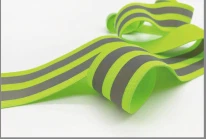
3D Silicone Printing Elastic
3D Silicone Printing Elastic refers to a process and material used in additive manufacturing, specifically designed for creating objects that require high elasticity or flexibility. This technology involves the use of specialized silicone-based materials that can be extruded or deposited layer by layer to form complex shapes and geometries.
Description
. Supplier
Founded in 1991, Jiangsu Golden Autumn Group is one of the world's leading manufacturers of garment accessories serving customers all over the world. The products are widely used in intimate apparel and sportswear. The company has advanced manufacturing facilities and technologies. Complete processes including yarn twisting, covering, yarn dyeing, crochet, weaving, warp knitting, after-dyeing and printing are all under one roof.
The company was founded in 1991 and started from ordinary elastics; year 2000, started to develop all kinds of jacquard elastic and were among the earliest factories producing jacquard elastics in Jiangsu province; year 2004, transisted and upgraded to producing jacquard, woven elastic, and after-dyeing elastics for underwear(bra strap, underwear band, folded elastc); year 2007, moved to new factory, with enlarged capacity and improved quality control, to serve customers all over the world; year 2011,established new company Jiangsu Golden Autumn Lace Co., LTD, professional in design, development, production and sales of lace and fabric products.
Why Choose Us?
High quality
Our products are manufactured or executed to very high standards, using the finest materials and manufacturing processes.
Competitive Price
We offering a higher-quality product or service at an equivalent price. As a result we have a growing and loyal customer base.
Rich experience
Our company has many years of production work experience. The concept of customer-oriented and win-win cooperation makes the company more mature and stronger.
Global shipping
Our products support global shipping and the logistics system is complete, so our customers are all over the world.
After-sale service
Professional and thoughtful after -sales team, let you worry about us after -sales Intimate service, strong after -sales team support.
Advanced equipment
A machine, tool or instrument designed with advanced technology and functionality to perform highly specific tasks with greater precision, efficiency and reliability.




What is 3D Silicone Printing Elastic?
3D Silicone Printing Elastic refers to a process and material used in additive manufacturing, specifically designed for creating objects that require high elasticity or flexibility. This technology involves the use of specialized silicone-based materials that can be extruded or deposited layer by layer to form complex shapes and geometries.
1.Enhanced comfort: The raised patterns and textures on 3D Silicone Printing Elastic can add a layer of cushioning and softness, providing enhanced comfort in applications such as clothing, sports equipment, or medical devices.
2.Improved grip and traction: The three-dimensional designs can create a textured surface that offers improved grip and traction. This is particularly beneficial in products like gloves, footwear, or handlebar grips.
3.Branding and marketing: The customizable nature of 3D Silicone Printing Elastic allows for the incorporation of logos, branding elements, or unique designs. This can help businesses promote their brand and create a memorable product or packaging.
4.sensory feedback: In certain applications, such as touch-sensitive devices or educational tools, 3D Silicone Printing Elastic can provide sensory feedback through different textures or shapes, enhancing user interaction and learning experiences.
5.Aesthetic appeal: The ability to create intricate and detailed designs on elastic materials using 3D silicone Printing adds an aesthetic appeal to products. It can make them more visually appealing and attractive to consumers.
6.Customization options: This technology offers a high degree of customization, allowing for the creation of one-of-a-kind designs or the production of small batches with unique patterns or logos. This is beneficial for personalized products, limited editions, or niche markets.
7.Durability: The combination of elastic fibers and silicone-based printing can result in a durable material that withstands wear and tear. This is especially important in applications where the elastic component is subject to frequent stretching or exposure to harsh conditions.
8.Lightweight: 3D Silicone Printing Elastic is typically lightweight, making it suitable for applications where weight is a concern, such as in wearable devices or athletic equipment.
9.Water resistance: Depending on the specific materials and printing process used, 3D Silicone Printing Elastic can offer water resistance or water repellency properties. This makes it suitable for products that need to withstand exposure to moisture or water.
10.Functionality integration: The three-dimensional designs can serve a functional purpose, such as providing channels for ventilation, grip areas, or structural reinforcement in products.
Types of 3D Silicone Printing Elastic
Digital light processing (DLP): This technology uses a projector to cure liquid silicone resin layer by layer. It can create highly detailed parts quickly and is suitable for producing complex geometries.
Stereolithography (SLA): Similar to DLP, SLA uses a laser to cure photopolymer resin. However, it typically cures one point at a time, which can be slower than DLP. Some SLA machines are capable of printing with silicone-like materials, although these are not always true silicones.
Drop-on-demand (DOD): This method involves jetting small droplets of silicone ink onto a build platform. The ink then cures through a combination of UV light and heat. This process can produce very fine details and smooth surfaces.
Direct ink writing (DIW)/fused deposition modeling (FDM) adapted for elastomers: While traditional FDM printers are designed for thermoplastics, some specialized printers have been adapted to handle silicone pastes or putties. The material is extruded through a nozzle and cures as it cools or under UV light.While traditional FDM printers are designed for thermoplastics, some specialized printers have been adapted to handle silicone pastes or putties. The material is extruded through a nozzle and cures as it cools or under UV light.
Thermal inkjet printing of silicone rubber: This process utilizes a thermal inkjet head to deposit silicone rubber ink onto a substrate. The ink is then cured using UV light. It's a relatively new technique that offers potential for high-throughput manufacturing.
Two-photon polymerization (TPP): A high-resolution 3D printing technique that uses a focused laser to polymerize photosensitive resins at the voxel level. Modified silicone resins can be used in TPP to create microstructures with exceptional detail.
Application of 3D Silicone Printing Elastic

1.Medical devices: Silicone's biocompatibility makes it ideal for medical applications, such as prosthetics, wearable sensors, catheters, and drug delivery systems. 3D printing allows for the creation of patient-specific devices that can conform to body shapes and provide a better fit.
2. Healthcare and wellness: Personalized medical braces, orthotics, and other therapeutic devices benefit from the precise geometry and material properties offered by 3D silicone printing.
3. Consumer goods: From kitchen utensils to phone cases, silicone's durability and non-toxic nature make it a popular choice for everyday items. 3D printing enables the creation of intricate designs and custom shapes that cater to individual preferences.
4. Automotive industry: Silicone parts can withstand high and low temperatures, making them suitable for automotive applications like gaskets, seals, and hoses. 3D printing can streamline the production of these components, especially for prototypes and specialized vehicles.
5. Aerospace: In the aerospace industry, silicone parts are used for insulation, sealing, and protection against corrosion. 3D printing can produce complex geometries that are essential for aerospace components while reducing weight.
6. Electronics: Silicone is used in electronics as insulators and protective casings due to its electrical insulating properties and resistance to environmental stresses. 3D printing can create custom electronic enclosures and components with integrated circuits.
7. Food and beverage: Silicone is often used for cookware and food storage due to its non-reactive and non-toxic qualities. 3D printing enables the production of unique, customized molds for baking and confectionery.
8. Robotics: Soft robotics benefit from silicone's flexibility and durability. 3D printing allows for the fabrication of actuators, sensors, and grippers that can mimic biological movements.
9. Footwear and apparel: Silicone is used in shoe soles and athletic wear for comfort and performance enhancement. 3D printing can create custom footwear that provides support and fits individual foot shapes.
10. Art and design: Artists and designers can use 3D silicone printing to create unique sculptural pieces, jewelry, and decorative items with complex textures and shapes.
Components of 3D Silicone Printing Elastic
Silicone material: The primary component is a form of silicone rubber in a liquid or paste state, specially formulated for 3D printing. This material must be photo-curable or thermally curable, depending on the printing process used.
Printing equipment: The equipment may vary based on the printing technology employed, but generally includes:
●Printer platform: A flat surface where the object is built up layer by layer.
●Resin vat or extrusion cartridge: Contains the silicone material; for vat polymerization processes, it holds the liquid resin, while for extrusion-based printing, it holds the silicone paste or putty.
●Light source: In vat polymerization processes like DLP or SLA, a UV light source cures the silicone resin. For material jetting, UV light is used to cure the deposited drops of silicone ink.
●Nozzle: In extrusion-based printing, the nozzle dispenses the silicone material. It must maintain a consistent flow and temperature to ensure print quality.
●Movement mechanisms: Components such as linear guides, motors, and belts control the positioning of the printhead and platform, enabling the creation of layers.
Software: Specialized software controls the printing process. It converts a digital model into instructions that guide the printer's movement and material deposition.
Support structures: Some silicone printing processes require temporary support structures to hold up overhanging features during printing. These supports are removed after the object is fully cured.
Post-processing equipment: After printing, the object may require additional curing under UV light or heat to achieve the desired mechanical properties. Support removal tools and finishing equipment might also be used.
Safety measures: Due to the use of UV light and potentially hazardous materials, safety measures such as UV Protection goggles, gloves, and proper ventilation are important components of the 3D silicone printing setup.
Material of 3D Silicone Printing Elastic
The material used in 3D silicone printing is a type of silicone rubber that is designed to be compatible with the printing process. This silicone is typically a viscous liquid or a putty-like substance that can be precisely deposited or cured layer by layer to create elastic objects. The main components of silicone rubber include:
Polysiloxane (silicone polymer): This is the backbone of the silicone material and consists of alternating silicon and oxygen atoms. The length and branching of the polysiloxane chains affect the final properties of the silicone, such as flexibility and elasticity.
Methyl or phenyl groups: These groups are attached to the silicon atoms in the polysiloxane chain and influence the physical properties of the silicone. Methyl groups result in a softer, more flexible material, while phenyl groups increase the strength and heat resistance.
Crosslinkers: Crosslinking agents help to create bonds between the polysiloxane chains, giving the silicone its elastic properties. The degree of crosslinking determines the hardness and durability of the final product.
Fillers: Inorganic fillers such as silica, carbon black, or glass fibers can be added to improve certain characteristics, such as tensile strength, abrasion resistance, or thermal stability.
Plasticizers: These are added to increase the flexibility of the silicone. They work by reducing the interactions between the polymer chains, allowing them to move more freely.
Colorants: For aesthetic purposes or to indicate different properties, colorants can be mixed into the silicone material.
Curing agents: These chemicals initiate the curing process when exposed to UV light or heat. They react with the silicone to form a network of chemical bonds, transforming the liquid or putty into a solid elastomer.
For 3D printing, the silicone material must be engineered to be printable. This often means it has a specific viscosity for extrusion-based printing or a particular formulation that allows it to be photocured in a vat polymerization process like Digital Light Processing (DLP). The material must also have the right balance of properties, including elasticity, tensile strength, and tear resistance, to meet the requirements of the intended application.
Advancements in silicone chemistry and additive manufacturing technologies continue to expand the range of silicone materials available for 3D printing, enabling the creation of highly specialized elastic components for various industries.
Process of 3D Silicone Printing Elastic
1.Design and modeling: Using Computer-Aided Design (CAD) software, the object is designed with the desired dimensions and features. The model is then exported as a file format that the 3D printer can read, such as STL or OBJ.
2. Slicing: The CAD model is sliced into thin, horizontal layers using specialized software called a slicer. This software generates a set of instructions for the 3D printer to follow, detailing the precise path and method for depositing or curing each layer of silicone.
3. Preparation of silicone material: The silicone material is prepared according to the printer's requirements. For extrusion-based printing, this might involve mixing the base silicone with a catalyst to start the curing process. For vat polymerization, the silicone is typically formulated as a photopolymer that will cure upon exposure to UV light.
4. Printing: The object is created by the 3D printer through one of several methods:
●Extrusion-based printing (fused deposition modeling, FDM equivalent for silicone): The silicone material is extruded through a nozzle onto the print bed in a predetermined pattern to form each layer. The material is partially cured as it is deposited, and the full cure occurs after the object is printed.
●Vat polymerization (digital light processing, stereolithography, etc.): The silicone resin is cured layer by layer using a UV light source. The light selectively cures the resin at specific points defined by the sliced CAD model. Once a layer is cured, the print bed moves down slightly, and another layer of resin is cured on top of the previous one until the entire object is formed.
5. Support removal: If support structures were used during printing, they are carefully removed from the object after the silicone is fully cured.
6. Post-curing: Depending on the printer and material, the object may require post-curing to reach its full mechanical properties. This can involve additional exposure to UV light or heat to complete the curing process.
7. Washing: To remove any uncured resin or excess material, the printed object might be washed in a solvent, such as isopropyl alcohol.
8. Finishing: The final step may include sanding, polishing, or other treatments to smooth out the surface and enhance the appearance of the object.

How to Maintain 3D Silicone Printing Elastic
1. Storage conditions: Store both the silicone material and the printed objects in a cool, dry place away from direct sunlight. High temperatures and UV radiation can accelerate the aging of silicone, causing it to become brittle over time.
2. Humidity control: Keep the storage environment at a moderate humidity level to prevent moisture absorption, which could lead to swelling or degradation of the silicone.
3. Avoid mechanical stress: Handle the silicone prints gently to avoid applying excessive force that could cause permanent deformation or tearing.
4. Proper curing: Ensure that the silicone is fully cured before handling or storing the printed objects. Incompletely cured silicone may not exhibit optimal elastic properties and can be more susceptible to damage.
5. Cleaning: When cleaning the silicone prints, use mild detergents and water. Avoid harsh chemicals that could react with the silicone and compromise its elasticity. After cleaning, allow the item to dry completely before storing.
6. Avoid oils and solvents
Keep silicone prints away from oils, solvents, and other chemicals that might cause the material to swell or degrade. Some solvents can also break down the chemical bonds within the silicone, leading to a loss of elasticity.
7. Post-processing care
If the object underwent any post-processing such as sanding, ensure that all abrasive materials are thoroughly cleaned off, as residual particles could scratch or weaken the silicone surface.
8. Regular inspection
Periodically inspect the stored silicone items for signs of deterioration such as cracks, discoloration, or loss of flexibility. Early detection of issues can prevent further damage and extend the life of the object.
9. Recalibration of printers
Regularly calibrate your 3D printer to ensure consistent print quality. Proper machine maintenance can prevent defects in the printed object that could affect its elasticity.
How to Choose and Use 3D Silicone Printing Elastic Correctly
Material selection
Tensile strength
Consider the required tensile strength for your application. Different grades of silicone offer varying levels of elasticity and durability.
01
Temperature resistance
Select a silicone material that can endure the expected operating temperatures without deforming or losing elasticity.
02
Chemical resistance
If the object will come into contact with chemicals, choose a silicone that is resistant to those substances.
03
UV resistance
For applications exposed to UV light, opt for silicones formulated to resist degradation from UV radiation.
04
Biocompatibility
For medical or skin-contact applications, ensure the silicone is biocompatible and non-toxic.
05
3D printing technology
Photo-curing technologies
Stereolithography (SLA) and Digital Light Processing (DLP) are suitable for printing high-detail elastomeric parts. They use UV light to cure liquid resins layer by layer.
Material jetting
Drop-on-Demand (DoD) 3D printing technologies jet photopolymerizable silicone directly onto a build platform.
Extrusion-based technologies
While traditional extrusion-based 3D printers are less common for silicones due to their viscosity, there are specialized extrusion-based systems designed for silicone and similar elastomers.
Design considerations
Wall thickness
Design walls thick enough to support the object during printing and to provide adequate structural integrity after curing.
Details and tolerances
High-resolution printing technologies can produce fine details, but consider the trade-off between detail and the flexibility of the finished product.
Support structures
Use supports where necessary to prevent warping or collapse during printing but remove them carefully to avoid damaging the part.
Orientation on the build plate
Optimize the orientation of the part on the build plate to reduce stress concentrations and improve the part's mechanical properties.
Printing process
Layer height
Choose a layer height that balances surface quality with print speed and resolution. Thinner layers can result in smoother surfaces but increase print time.

Curing parameters
Adjust the curing parameters (exposure time and intensity) based on the material's specifications to ensure proper curing without over-curing, which can make the part too brittle.
Post-processing
Support removal
Gently remove support structures to prevent damage to delicate features.
Post-cure
Depending on the material and technology, additional post-curing steps may be required to achieve the full mechanical properties of the silicone.
Surface finishing
Sanding or applying a sealant can improve the surface finish and enhance the part's appearance.
Influence Factors of 3D Silicone Printing Elastic Design
Designing for 3D silicone printing involves considering several influential factors to ensure that the final product meets the desired specifications and functional requirements. Here are some key factors that can affect the design of 3D silicone printed elastic components:
1. Material properties: The choice of silicone material is critical as it affects the part's flexibility, strength, durability, and resistance to environmental factors. Different silicone grades may have varying shore hardness, elongation at break, tear resistance, and temperature tolerance.
2. Layer height and resolution: The layer thickness and resolution of the printer determine the surface finish and precision of the part. Thinner layers can result in smoother surfaces and higher detail, while thicker layers might be faster but less accurate.
3. Support structures: Since silicone is a liquid during printing, supports are typically required to hold up overhangs and complex geometries. The design and removal of supports must be considered to avoid damaging the part or leaving visible marks.
4. Print orientation: The orientation of the part on the build platform can influence the mechanical properties and appearance of the finished product. For instance, certain orientations may require additional support structures or could lead to anisotropic strength.
5. Post-processing: After printing, silicone parts often require curing, which can be achieved through heat, UV light, or a combination of both, depending on the type of silicone used. Post-processing techniques like sanding, polishing, or coating might also be necessary to achieve the desired finish or enhance performance.
6. Wall thickness and geometry: The wall thickness should be sufficient to maintain structural integrity without being excessively thick, which would waste material and potentially cause issues during printing. Geometric features like sharp corners or thin walls need special attention to prevent distortion or failure during printing and curing.
7. Tolerances and dimensional accuracy: Understanding the dimensional tolerances of the printer and material is essential for designing parts that fit together or interface with other components. Tight tolerances might require more precise equipment or additional post-processing steps.
8. Design for functionality: The intended use of the part should guide the design process. Consider how the part will be loaded, moved, or stressed, and design accordingly to ensure that it performs as expected under those conditions.
9. Cost and efficiency: The design should take into account the cost of materials and the time required for printing and post-processing. Simplifying the design and optimizing print parameters can help reduce costs and increase efficiency.
10. Environmental and regulatory factors: If the part is intended for use in a specific industry, such as healthcare or food service, it may need to comply with relevant regulations and standards. This could include biocompatibility, non-toxicity, or resistance to cleaning agents.
By carefully considering these factors during the design phase, engineers and designers can create 3D silicone printed elastic components that meet the required specifications and perform reliably in their intended application.
Product History:3D Silicone Printing Elastic
The history of 3D printing elastic materials, particularly silicones, has evolved significantly since the inception of additive manufacturing technologies. Here's a brief overview of the milestones and developments that have shaped the field:
Early additive manufacturing: The origins of 3D printing date back to the early 1980s when Chuck Hull invented stereolithography (SLA) and patented the process in 1984. SLA was one of the first 3D printing processes capable of producing precise, detailed models directly from digital data. Initially, these printers were limited to hard plastics and resins, not yet suitable for elastic materials like silicone.
Material advancements: Over the next decade, various other 3D printing processes emerged, including fused deposition modeling (FDM), selective laser sintering (SLS), and direct metal laser sintering (DMLS). These technologies expanded the range of materials that could be used in 3D printing but still largely focused on rigid materials.
Introduction of flexible materials: It wasn't until the late 2000s and early 2010s that flexible materials began to gain traction in the 3D printing industry. Thermoplastic elastomers (TPEs) and thermoplastic urethanes (TPUs) were among the first flexible materials to be widely adapted for FDM printers, offering a degree of elasticity and flexibility not seen before in 3D printed parts.
Silicone material development: The development of silicone-based materials for 3D printing marked a significant breakthrough in the production of highly elastic and durable parts. Silicones are known for their excellent thermal stability, chemical resistance, and biocompatibility, making them ideal for a wide range of applications, from medical devices to consumer goods.
Specialized printing technologies: To effectively 3D print with silicone, specialized technologies had to be developed due to its unique properties. Drop-on-demand (DoD) techniques, such as inkjet printing, have been adapted to deposit silicone materials in a controlled manner. Additionally, photocurable silicone resins have been formulated for use with vat photopolymerization techniques like SLA and DLP.
Commercialization and applications: As 3D printing with silicone elastomers became more commercially viable, companies started to offer dedicated 3D printers and materials tailored for this purpose. The automotive, aerospace, and healthcare industries were among the first to adopt these technologies for prototyping and production of elastomeric parts.
Continued research and innovation: Today, ongoing research in materials science and engineering continues to push the boundaries of what's possible with 3D printed silicone. Researchers are working on improving the mechanical properties, printability, and cost-effectiveness of silicone elastomers to expand their use in various applications, including wearable electronics, soft robotics, and biomedical implants.

The total investment of the company is 300 million Yuan, have more than 600 staff in total , and plant area is 90000 square meters.
FAQ
Q: What is 3D silicone printing elastic?
Q: What are the benefits of 3D printing elastic?
Q: What types of 3D printing technologies are used for silicone elastics?
Q: What are the key properties of silicone elastomers for 3D printing?
Q: How does the elasticity of 3D printed silicone compare to traditionally molded silicone?
Q: What factors affect the elasticity of 3D printed silicone?
Q: How is the elasticity of 3D printed silicone measured?
Q: Can 3D printed silicone be used for medical applications?
Q: What are the challenges associated with 3D printing elastic materials?
Q: How is support removal handled in 3D printing elastic materials?
Q: What post-processing techniques are commonly used for 3D printed silicone?
Q: How do environmental factors affect the longevity of 3D printed silicone?
Q: What are some potential applications of 3D printed silicone elastomers?
Q: Are there any limitations to the size of objects that can be printed with silicone elastomers?
Q: How does the cost of 3D printing with silicone elastomers compare to traditional manufacturing methods?
Q: What are some best practices for designing 3D models for silicone printing?
Q: How does the choice of 3D printing technology impact the final product quality?
Q: What are some current trends in 3D printing elastic materials?
Q: How does the future of 3D printing elastic materials look?
Q: What are some resources for learning more about 3D printing elastic materials?
Hot Tags: 3d silicone printing elastic, China [productname]] manufacturers, suppliers, factory, Geometric Lace Fabric, Embroidery Lace Fabric for home textile, Polyester Lace Trim, hollow lace fabric, lace print cotton fabric, lace fabric for bras